Miso Udon

As I have mentioned before, Josh loves soups. He also loves seafood. Combine these two things and we have a major winner (this is the kid who, for his birthday one year, requested I make “fish head soup”–more on that some other day).

Josh discovered miso a few years back at a Japanese restaurant. We had ordered up a couple of rounds of yakitori, and while we were waiting the waitress brought over a cup of simple miso broth for each of us. Josh downed his in a couple of gulps, slurped up the tofu cubes, and asked for another.

With this history in mind, I decided to make a tempura udon, but with a miso base in place of the more traditional dashi/soy soup base. Here’s what I came up with:

The Soup

    10 cups water
    5 tablespoons miso paste
    1 tablespoon soy sauce
    1 scallion, sliced in 1/4 disks (all the white and about 1/2 of the green)
    1 handful snow pea greens (or some other quick-cooking greens)
    1/2 lb udon

Tempura Batter

    1/3 cup corn starch
    2/3 cup flour
    1 cup cold water

Tempura

    1-1/4 lbs large shrimp (I use 16-18 count)
    1 large carrot
    1 small squash

Tempura Dip

    1/4 cup soy sauce
    2 tablespoons rice wine vinegar
    2 tablespoons white wine

Put 10 cups of water in a large pot and start to heat it. Measure out 5 tablespoons of miso paste into a small bowl. I use red, but if you prefer white, go for it. When your water gets about “wrist warm,” transfer 5 tablespoons of water into the bowl with the miso paste. Add 1 tablespoon of soy sauce. Wisk until smooth, and then add the mixture to the pot of water. Bring to just under a boil, then lower to a simmer. Add your scallion wheels and let the soup simmer while you prepare your tempura.

While you are waiting for the soup base to heat up, prep your shrimp and vegetables. After you peel and de-vein your shrimp, pat them dry with a paper towel and set them aside. Peel your carrot and your squash and cut into thin slices–disks for your squash and angled ovals for your carrots. By all means swap vegetables here–maybe a sweet potato instead of squash.

Now it’s time to get your oil hot. It seems like I’ve been doing a lot of frying lately. Oh well. You are going to want 3″-4″ of oil in a deep heavy pan.

Oh: and don’t forget you’re going to be getting some noodles going as well. Depending on how quickly or slowly you are at frying, you might want to get that water going as well.

Wisk together the cornstarch, flour, and water to make the tempura batter. Starting with the squash, dip one disk into the batter, covering it completely. Allow the excess to drip off, then carefully place the battered disk into the hot oil. It will be easier to stick to one vegetable per batch. As you finish each batch, place the fried vegetables on paper towels to absorb the extra oil.

By the time you have finished your veggies, you are probably ready to drop your udon in the boiling water. Now you are ready to fry your last batch: the shrimp.

Fry the shrimp as you did the other tempura. Make sure that oil temperature doesn’t drop too low–you really want a nice, crisp tempura coating on those shrimp. Place the tempura shrimp on paper towels as well.

OK, drain those noodles and add to your soup base. Sometimes I will plate noodles in everyone’s bowls and then add the soup, but for this dish I say it’s noodles in the pot. Finally, add a handful for quick cooking greens into the pot. I used snow peas greens because they looked great at the farmer’s market.

For serving this dish, I plate up shrimp, carrots, and squash on separate plates. After that it’s up to individual palates whether or not to garnish the soup with the tempura (the way Josh and I eat it) or leave it to the side (like the rest of the family). Either way, the tempura dipping sauce is a nice addition–either dribbled into the soup, or as a dip.

Posted in Uncategorized | Tagged , , , | 3 Comments

Arancini? I Thought I was Making Croquetas

I’ve been making croquetas for years–it’s a great way to use up leftovers, and we all love them.

The only problem is: I have been making arancini all this time and calling them croquetas. I explained this to Josh the other night.

Josh: “What’s for dinner, daddy?”

Josh’s Dad: “I’m making arancini.”

Josh: (Watching me drop breaded quenelles into hot oil): “Looks like you’re making croquetas.”

Josh’s Dad: “Actually, I’ve been calling arancini by the wrong name for years. Croquetas are made with flour, or sometimes potato. Arancini di riso are made with rice.”

Josh: (Watching me drop quenelles into oil): “Looks like croquetas to me. I love croquetas.”

The rest of the family were just as eager to embrace the “new” name for this dish. My guess is that we are going to continue to eat these little tasty morsels for years to come–and that we will continue to call them croquetas.

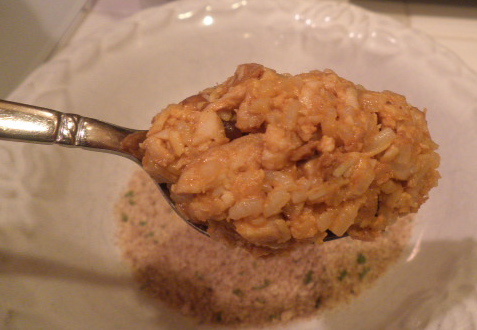
It’s a little strange for me to think about writing a recipe for arancini. It’s more of a concept than a formula–and as I’ve already said, it’s all about the leftovers. You want to mix together equal portions of leftover, finely chopped meat (I’ve done this dish with leftover pork, ham, chicken, turkey, and beef) and rice. Add to that half a portion of grated Parmesan cheese and one egg.  The other night, it was leftover paprika chicken and Spanish rice. Here’s how it turned out:

    2 1/2 cups chopped, cooked chicken
    2 1/2 cups cooked rice
    1 1/4 cups grated Parmesan cheese
    1 egg
    breadcrumbs

Heat up a deep, heavy-bottomed frying pan and get 3″ of oil to a good frying temperature. You want a hot oil here, but not smoking. If you’re feeling wealthy, by all means use olive oil.

When your oil is hot enough, form quenelles with a teaspoon. You want to form them pretty tightly so they don’t fall apart in the oil. Roll the quenelles in the breadcrumbs, covering them thoroughly. Knock off any loose breadcrumbs and drop them carefully into the hot oil. Monitor your oil temperature. You don’t want to burn your coating, but if your oil isn’t hot enough, your arancini will start to fall apart.

Fry to a golden brown and place on paper towels to drain any excess oil.

Transfer your arancini to a serving plate and garnish with more grated cheese.

So…why arancini? The word means “little oranges” in Italian. Traditionally, the meat-rice-and -and cheese mixture is colored with a dollop of tomato paste. If I happen to have some handy in the fridge, I will add it–but I’m not going to open up a can for a single teaspoonful.

I have to say, though: between the paprika from the leftover chicken and the annatto coloring from the Spanish rice, those arancini the other night were plenty orange!

Posted in Uncategorized | Tagged , , , | 7 Comments

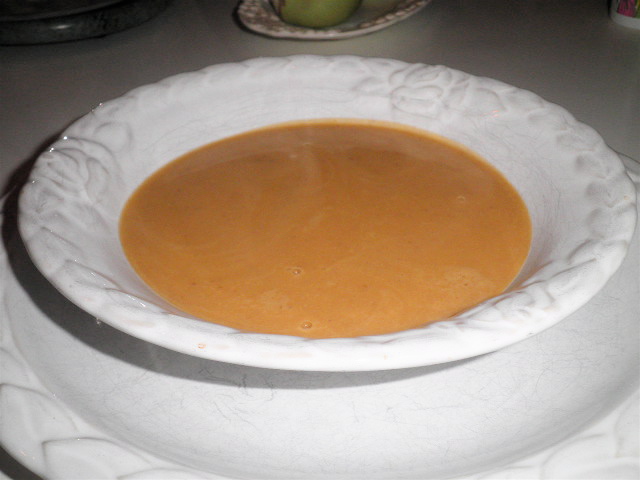
Butternut Pecan Soup

Josh is a huge fan of any soup. OK, not quite any soup (red pepper millet soup didn’t quite make the grade) but pretty darn close to it. It’s a hard say what’s his favorite, but this butternut soup is pretty close to the top of his list.

Squash soups are great in the winter. I came up with this variation a week or so after Thanksgiving, when I was trying to use up a big bag of leftover crushed pecans. That first attempt tasted a little too much like pumpkin pie for my liking, so I nixed the nutmeg and cinnamon on later versions. Below is the version we had last night, which went wonderfully with paprika chicken for a winter night’s meal.

    1 large butternut squash (about 2.5 lbs)
    1 cup crushed pecans
    1/2 small onion
    2 quarts water
    2 teaspoons salt
    1/2 teaspoon ground ginger
    1/4 teaspoon cardamon
    1/2 cup milk

Slice the squash lengthwise, remove seeds, and place face-down in an oiled baking dish. Oil the skin as well and bake in a 375 degree oven for about an hour. The squash should be soft to touch, and the skin should be browned. Set aside until it is cool enough to handle.

Scoop out the squash flesh and place it, along with all the other ingredients except the milk, into a large pot. Bring to just under a boil, then lower the heat and simmer for about 30 minutes. A note on consistency: 8 cups of water may seem like a lot, but it’s really not; my 2.5 lb squash yielded 3 cups of flesh, plus a cup of pecans–that’s 2 cups of liquid per 1 cup of solid. If your squash seems very watery, or you prefer a thicker soup, go ahead and reduce the water by up to a cup. I prefer something thinner (it’s soup, after all, not puree).

When 30 minutes have passed, blend your soup in small batches (careful, that soup is hot!) until smooth, and then return to a pot. Adjust seasoning, if necessary, then add the milk just before serving.

Posted in Uncategorized | Tagged , , | 2 Comments

Spaghetti Carbonara

In the summer of 1978, my parents took the entire family on a two month trip to Europe. We landed in Rome late in the evening, and by the time we arrived at Zia Bruna’s house, we were exhausted, disheveled, and starving.

We sat on her sofa, bleary-eyed, making small talk with our Italian cousins as the smell of bacon and onions began to drift out of the kitchen. Less than a half hour later, we were being served one of the tastiest and most appreciated dishes of pasta I have ever eaten.

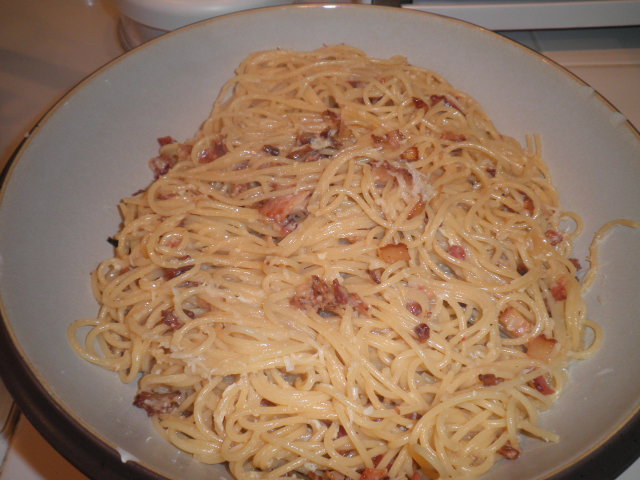
Thus was my introduction to spaghetti carbonara, which has since become a Joshua all-time favorite. It is super-quick, super-satisfying, and super-easy (well, there is a timing issue here, but even that’s not too tricky). What follows is what I consider the most authentic rendering of this dish.

      1 lb spaghetti (and I do mean spaghetti–no linguine or angel hair)


      5 eggs


      1/2 lb of bacon, chopped (see note below)


      1 small onion, chopped (no more than 2/3-3/4 cup)


      salt & freshly ground black pepper, to taste


    freshly grated Parmesan cheese

First things first: get those eggs out of the fridge. The colder the eggs, the harder a time you will have with the final step here.

Put a large pot of water on high heat for the pasta. Don’t forget to salt the water (at least a tablespoon. If you can’t taste the salt in the water, you haven’t added enough). While the water heats up, get your chopped bacon into a 12 inch frying pan on medium heat. Note: traditionally, this dish calls for pancetta, which I have used before (I can’t vouch for Zia Bruna’s–I didn’t even know what pancetta was in 1978). If I am planning this meal, I will buy thick-sliced or slab bacon; more often than not, though, I am making this dish spur of the moment and using whatever bacon I happen to have in the house). Let the bacon cook long enough for the fat to start to render, then add your chopped onion.

While your bacon and onions cook and your water moves toward a boil, wisk your eggs thoroughly in a room temperature glass bowl. Add salt and fresh ground black pepper to taste. I use about a teaspoon of salt, and probably a 1/4 teaspoon of black pepper. You want to be able to see the pepper in your egg–one version of why this dish is called “carbonara” is that the pepper resembles coal dust. Set your eggs beside your frying pan. You’re going to want them close at hand.

Now if I get my timing just right, the bacon and onion are just where I want them when the water has come to a boil. You want some touches of brown on your onion and some crispness in your bacon, but don’t let things get too crunchy. Shut off the heat, but leave the bacon and onion in the pan–and go ahead and leave that rendered fat in there too. If you are freaked out by having that much fat go into your final dish, you can remove some. You definitely want to leave some fat in there, though. In our house, we leave it be. Drop your pasta in the boiling water.

By now, you should have your spaghetti in the boiling water, your bacon and onion cooked and sitting in the frying pan, your eggs in a bowl next to the frying pan, and a colander sitting in the sink. It is important that your frying pan is not too hot by the time you get to this last step–it should have been off the heat for about 10 minutes.

Once your pasta is cooked al dente, thoroughly and quickly drain the pasta in the colander. You don’t want to lose much heat from the pasta–it is what will cook your eggs. Transfer your pasta to your frying pan and immediately pour your eggs over the top of the spaghetti. Let the spaghetti sit for 30 seconds or less (depending on how much residual heat you have in the frying pan; you do not want the egg to cook onto the frying pan). Now toss the pasta through the egg mixture, which will have started to set and cook onto the spaghetti. The goal here is not scrambled-eggs-and-spaghetti; you should end up with something closer to a cooked-enough-to-forget-about-salmonella-but-wet-enough-to-call-a-sauce mixture.

Finally, transfer your pasta to a serving dish, add a touch of grated cheese, and give it one final toss before serving.

We are a family of five–I always cook a full pound of pasta with this dish and plan on leftovers. If you want to halve this recipe, use two eggs.

Posted in Uncategorized | Tagged , , , , , | 3 Comments

Morning Cake

Milk in the batter! Milk in the batter! We bake cake! And nothing’s the matter!

Maurice Sendak’s In the Night Kitchen is certainly a strange and wonderful (and for some controversial) children’s book, in which Mickey, awakened at night by sounds coming from downstairs, falls in true-to-dream fashion out of bed and pajamas, through walls and floors and into a fantastical kitchen scene, where three Oliver Hardy look-alike cooks are baking the morning cake. Mickey is mistaken for milk and mixed into the batter, only to break free, fly away in his dough-plane, and ultimately save the morning cake by adding the needed milk.

We all love Sendak books in our house, and the weird dreamwork elements of this book never bothered any of us. Not only was In the Night Kitchen a favorite book for all of the kids: it also inspired the name of another weekend breakfast favorite: Morning Cake.

OK, so Morning Cake is really just a variation on banana bread, something that morphed out of a recipe from the old edition of The Moosewood Cookbook. I am not much of a baker to be honest, but there’s something about batter that is so very kid-friendly (and clearly Sendak understood that). Josh is often in a battle with his younger sister Hayleigh (not quite 5 years old) for the wooden mixing spoon whenever we’re working on something that involves butter, sugar, eggs, and flour.

So here is Morning Cake in all its glory:

    1 stick of butter (very soft)
    3/4 Cup brown sugar
    1 egg
    1 Teaspoon of vanilla extract
    1/3 Cup milk (see note below)
    3 black bananas
    2 Cups flour
    1/2 Teaspoon salt
    1-1/2 Teaspoons baking powder
    1/4 Teaspoon baking soda
    1 Teaspoon cinnamon

Preheat your oven to 350 degrees.

Beat the brown sugar into the softened butter until things start getting airy. Add the egg and beat again until creamy. Add the vanilla and the milk. NOTE: in reality, on many mornings milk isn’t in the batter. Get creative. The original Moosewood recipe called for black coffee, and that is a good choice. I have also used orange juice, cranberry juice, green tea–even yerba mate. Next, add three black bananas–I usually have an ample supply in my freezer (the graveyard for all over-ripened bananas). Mix until smooth.

Next, combine the remaining dry ingredients and add to the wet. Then, to quote Sendak, “Stir it! Scrape it!” (And yes, Josh and I do make literary allusions throughout this process as we “Make it! Bake it!”)

Thoroughly butter a glass bread pan–bottom and sides all the way to the top (and make sure you get those corners). Transfer the batter to the bread pan and bake at 350 degrees for one hour. The top should crack and crust, and it may look done before it actually is–you will definitely want to probe with a toothpick to make sure it is not gooey in the middle. If your oven runs hot, you might test at 50 minutes, but for me, I am usually leaving the bread in for a few minutes past an hour. If you are concerned about the top getting too brown, you can always give the bread an aluminum foil “tee-pee,” shiny side facing outward, to keep it from getting too dark.

When your bread is done, let it sit out of the oven and in the bread pan for another 10 or 15 minutes, then transfer it to a wire cooling rack for an additional 5 or 10 minutes before slicing and eating.

Do I need to tell you that this bread is best warm?

Posted in Uncategorized | Tagged , , , | 5 Comments

Rolled-up Pancakes

I am not sure when or why crepes became a standard Sunday morning breakfast in our household–I do know, though, that it was long enough ago that we called them “rolled-up pancakes” for clarity’s sake. Crepes are one of those things that sound far fancier and far more complicated than they actually are. We tend to be pretty simple in our fillings as well–sugar, yogurt, and our favorite variation– a Josh original: brown sugar. Here’s the batter recipe:

1 Cup milk
3/4 Cup water
3 eggs
3 Tablespoons melted butter
1/2 Teaspoon salt
1 Teaspoon vanilla
1 Tablespoon sugar
1-1/2 C flour

Beat the eggs and sugar, then add the milk, water, and vanilla. Mix. combine the salt and flour in a separate bowl, and then add dry ingredients to wet and mix.

And here’s a confession: I never sift. I have tried making crepes using sifted and unsifted flour, with little appreciable difference. The most important step in eliminating lumps is to let the batter sit for at least a 1/2 hour before you start making crepes.

Let’s see: did I forget anything? The butter!

I add the melted butter to the batter mixture last, just before I let it sit. Can you add it sooner? Sure–but the fact is, for whatever reason, I have a bad habit of forgetting this step, sometimes only remembering after I am trying to flip a crepe that is now not cooperating. Adding it last helps me remember not to forget it!

Speaking of butter: there’s plenty of fat in the batter to keep the crepes from sticking, but you should still lightly butter your pan for the very first crepe. And speaking of pans: I don’t use a special crepe pan–just a standard 10 inch non-stick frying pan.

When your batter has sat for at least a half hour, give it a quick, light stir. Get your pan hot (a drop of water should dance), give it a quick swipe with a stick of butter, then pour enough batter to make a 4-5 ” circle in the middle of your pan (you should cover just under half the area of the pan). Then, raise the edge of the pan, rotate and swirl. Don’t be afraid of getting the crepe too thin. Bring the batter all the way to the edge.

You are going to want to let that crepe sit for a couple of minutes. It’s your choice how long to keep it going. I usually like them with just touches of color, but not crisp at the edges. When you’re happy, give the crepe a gentle flip with a spatula. You only want heat on this side for maybe 30 seconds. Don’t worry if the first one comes out less than perfect. I treat it as part of the pan-seasoning process.

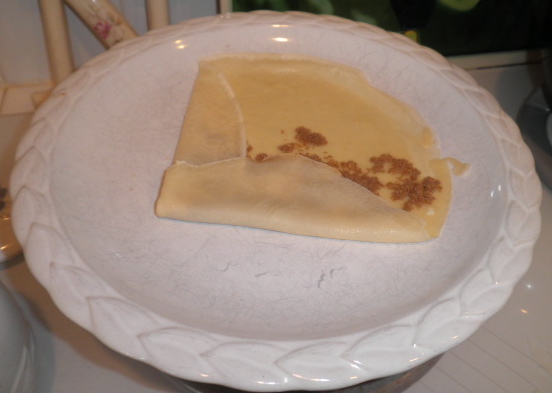
Transfer the crepe to a plate, darker side down. Now you add your filling–brown sugar, or whatever. Add a small amount to the bottom third of the crepe–Don’t go overboard–this isn’t a burrito, though you will roll it up like a burrito.

Do you know how to do a burrito fold? It looks like this:


And then:


You can use this same recipe for dinner crepes too–just remove the vanilla and sugar from the batter and fill as you see fit!

Posted in Uncategorized | Tagged , , , | 1 Comment

The Lowly Meatball

Meatballs of any variety are a major hit in our household. What they accompany is entirely secondary. In fact, not too long ago, Josh declared that an enormous bowl of meatballs would be a perfectly adequate dinner–actually, he called it “Paradise.”

A nice choice of words, in my opinion–the inelegant meatball–that workhorse of kid-friendly cuisine–can be quite heavenly indeed.

The way I make meatballs is quite different from my mother’s approach. She’s a first generation Italian, arrived in the States in 1954, and as with many Italian-Americans of that era, she transformed a cuisine of scarcity and necessity into a celebration of American superabundance. When she makes meatballs, it all about the meat. She buys sirloin tip, has it ground in the store, and brings it home to produce, well, little, dense balls of meat. I prefer a much softer meatball, which means much more filler than my mother would ever dream of using–and something much closer to the meatballs my grandmother would make.

My mix goes something like this:

    1/2 to 3/4 lb each of ground chuck and ground pork (around 1.25 lbs total)
    1 Cup seasoned breadcrumbs
    1/2 Cup grated Parmesan cheese
    1 Egg
    1 Teaspoon salt

Combine all the ingredients in a bowl (with your hands, of course!) and form balls. What size meatball you make is a matter of taste and utility. I will make make tiny meatballs not much bigger than a shooter marble (polpettine) for soup; I’ve even made one single, massive polpettone out of a tweaked version of the recipe above in an approximation of a Chinese clay pot dish Josh and I love.

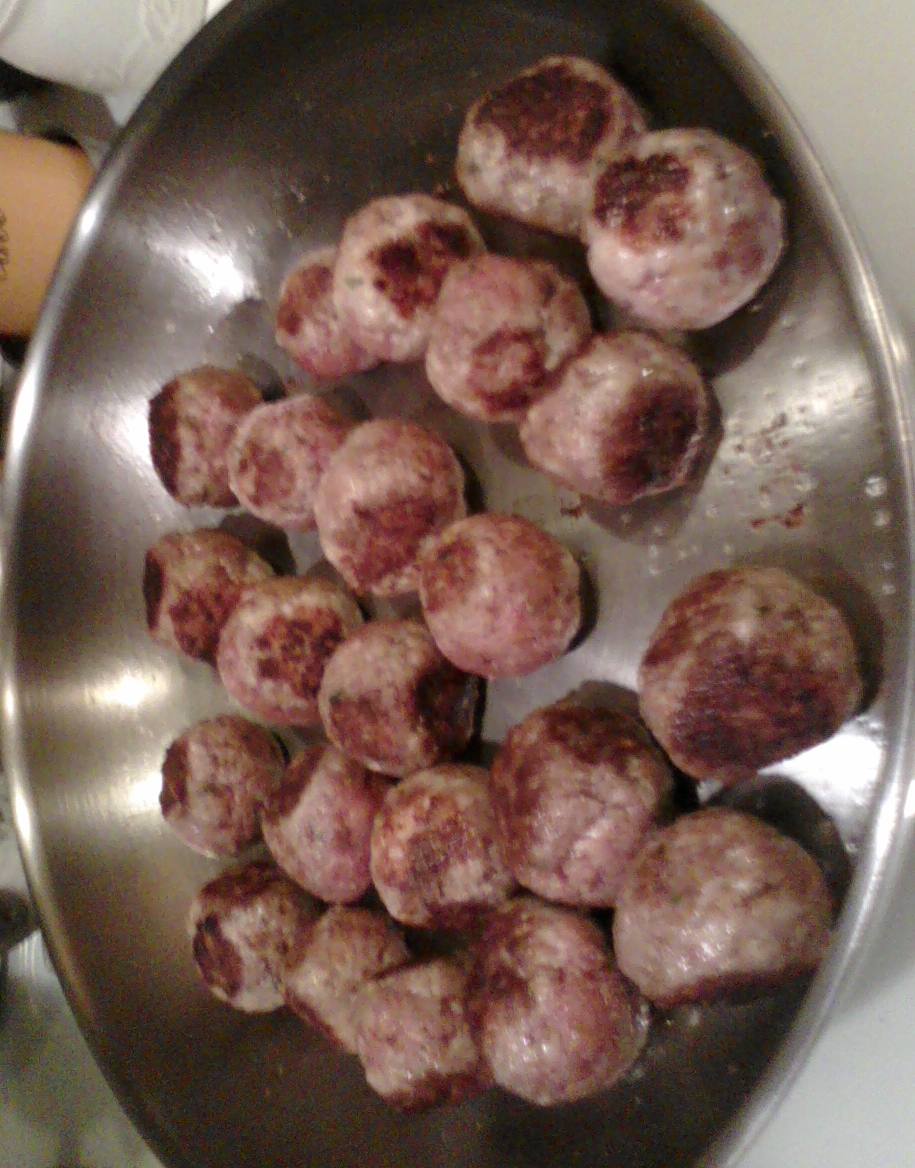
The other key for me is pan-frying. Yes, I know it would be healthier to bake the meatballs and let the oil drain away, but you lose out on that great taste and texture that comes from browning all the way around. I use a stainless steel pan with just a drizzle of olive oil to get things going. I can also fit all of the meatballs into a single frying pan without over-crowding things.

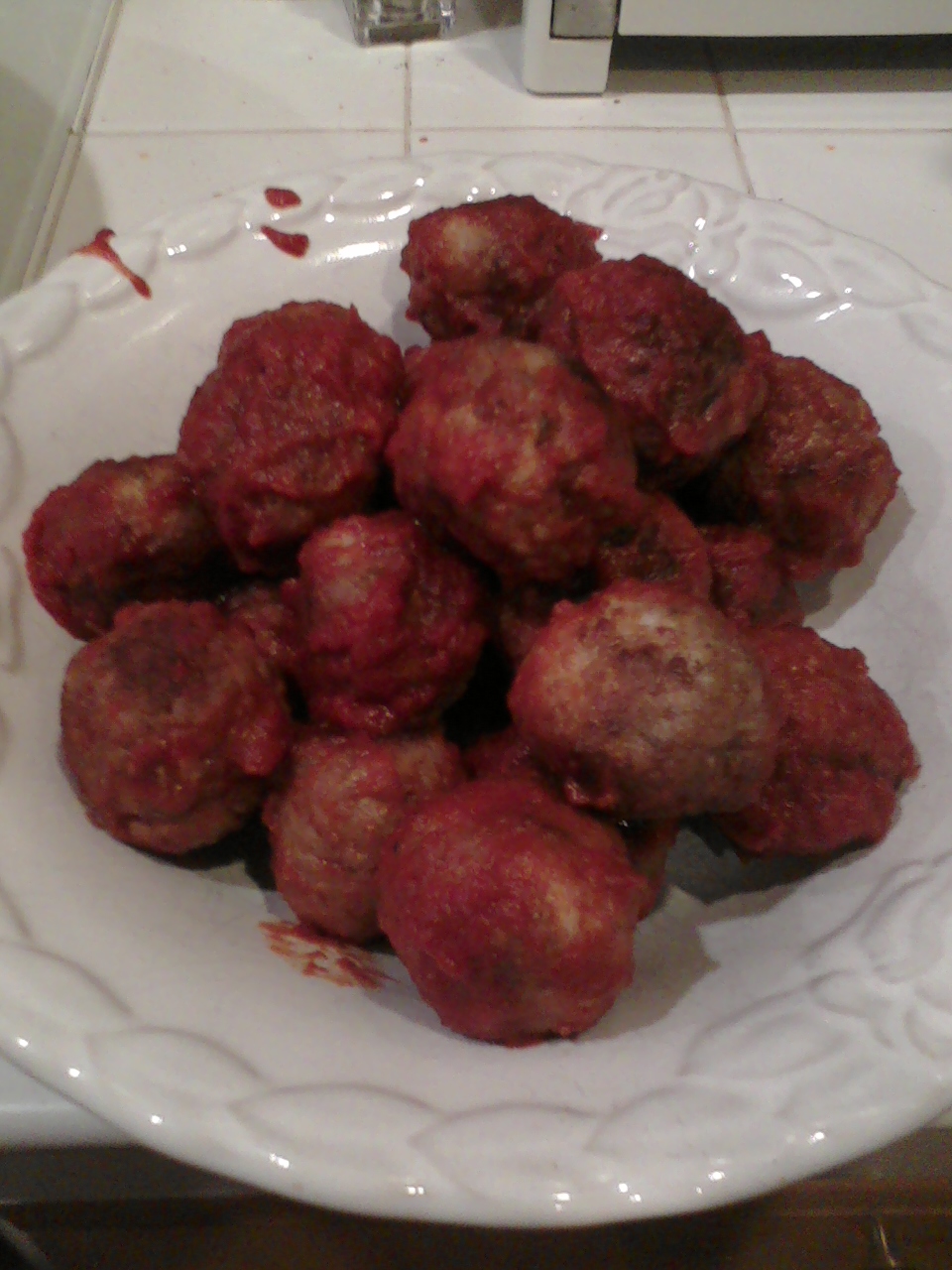
What you do with your meatballs after that is up to you. When I make spaghetti with meatballs, I will get a simple sauce going in one pot (more on that some other day) while I am prepping the meatball mixture. Once I get ready to start frying, I get the water going for the pasta. If I time things right, by the time I am ready to drop the pasta, the sauce and the meatballs are done. Rather than adding meatballs to sauce, I do it the other way around–I lower the heat and then add as much sauce as I plan to use for the pasta into the frying pan with the meatballs (be prepared for lots of spattering tomato sauce). Then I let the meatballs sauté in the sauce until a minute or two before the pasta is ready to be drained.

When the pasta is just a minute before al dente,  pull the meatballs from the sauce and put them in a serving dish. I usually use tongs instead of a fork.

Next, and last: drain your pasta and toss into the sauce in the frying pan. I try to sauce lightly, because that’s the way the majority of the family like it (Josh and I will sometimes add a bit of extra sauce to our own plates).

So that’s it: simple, humble, and inelegant “paradise” in a bowl. Enjoy!

Posted in Uncategorized | Tagged , , , , | 2 Comments

With and For and Around….

All of my children are at home in the kitchen, but it is my middle-born, Joshua, who takes greatest pleasure in cooking with me. Over the past couple of years, cooking good food, eating good food, and talking about good food has become “our thing.”

When I am not cooking with Josh, I am usually cooking around Josh. He likes hanging out with me in the kitchen, and the feeling is mutual. When he isn’t lending a hand, he is usually lending a taste–and an opinion. He has his own takes on what works and what doesn’t. He’s a fan of old favorites and new dishes alike. Don’t get me wrong: my oldest and youngest enjoy a good meal, and they each have their favorites, but Josh talks food. It is a language we share.

In the afternoon, when he gets home from drum lessons or from playing with the neighbor’s kids, he greets me in the kitchen with: “What’s for dinner, daddy?” More nights than not end with a kiss and a question: “What’s for breakfast, daddy?” Errands with Josh on the weekend are often well-time to coincide with a lunchtime stop (his latest dine-out favorites: LA galbi and idli sambar).

I guess it’s only natural, then, that as family meals have evolved over the years, I have developed dishes with Josh in kitchen and in mind. Only recently it occurred to me that some of these recipes, and more importantly, the stories around these meals, might be of interest to those of you outside of my family and my kitchen.

I hope you will agree!

Posted in Uncategorized | 1 Comment